![Influencer marketing for Aussie brands: Set clear objectives: help [audience] understand [point] so they can [action].; Ensure content complies with Australian Consumer Law and disclose paid partnerships clearly.; Use tagged links and analytics to track visits, purchases or enquiries accurately.](/covers/influencer-marketing-strategy-for-australian-brands-1600.webp)
Campaign Strategy
Influencer marketing strategy for Australian brands
Plan an Australian influencer campaign around a clear audience, credible creator role, accurate offer and measures that match the objective.
Start with a customer decision. Decide who the campaign must reach, what they should understand or do, and whether a creator can help credibly. Then set the content, budget and evidence for judging the result. If the product, offer or destination is not ready, fix it before booking posts.
Define the job
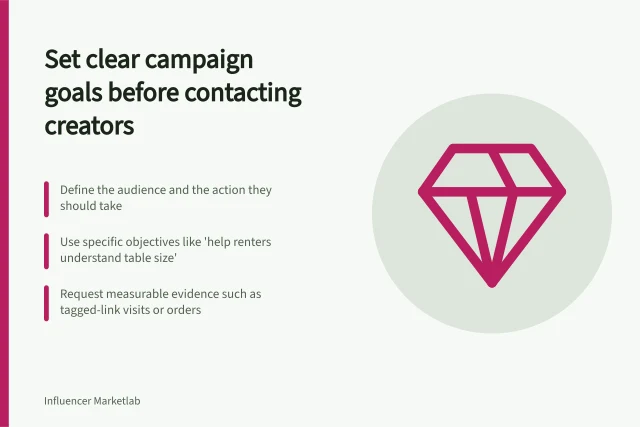
Write one sentence the team can use to assess ideas: “Help [audience] understand [specific point] so they can [next action].” A useful objective identifies a customer question and the action available to that customer. “Get more exposure” does not say which audience or message matters.
Choose one primary objective. Awareness, product understanding, qualified visits and purchases call for different content and evidence.
A post introducing an unfamiliar product may do its job without immediate tracked sales. A campaign meant to bring people to an offer needs a working destination and a clear action. Record secondary measures where useful, but judge the campaign against the job agreed beforehand.
Define the audience by need and buying context, then check where the product can be bought or delivered. An Australian creator’s location alone does not prove their viewers are in the service area.
Market research can sharpen the audience definition: why and how customers use the product, what they might pay, and what alternatives competitors offer. Use those findings to make the customer question specific rather than assuming everyone is a potential buyer.
Place the campaign in the marketing plan
Use market research to clarify the customer need the campaign should address and what makes the business different. It can also show whether an influencer campaign is the right tactic for the job.
Decide how you want customers to think about the product or service before settling on campaign messages. Positioning might centre on value for families or a high-end service. Use that choice to keep the creator’s explanation consistent with the product’s place in the market.
Set a time frame for the campaign goal and include it in the wider marketing plan. That plan links the target market, messages, channels, activities and basic budget, and provides a basis for evaluating success.
Choose the creator’s role
A creator may introduce a product, show it in use, explain a decision they understand or answer a recurring audience question. Select that role before selecting the person. A demonstration requires the product and enough time to use it. A personal recommendation requires a genuine experience the creator is willing to describe honestly.
Review ordinary posts and sponsored work for how the creator explains things, the questions viewers ask and the fit with the subject. Request recent audience information relevant to the campaign geography and format where available.
Compare candidates on audience fit, a credible content angle, comparable content results, availability and deliverables. Follower count is context, not a forecast of reach or sales.
Several smaller accounts may give a brand different conversations with specific communities; one larger account may suit a broad announcement. Neither arrangement guarantees useful exposure. Compare recent views or reach for the proposed format where available, check audience geography and likely overlap, and choose a mix that fits the campaign’s purpose.
A niche community voice can suit a specific customer context; examples include foodie influencers for local cafés, craft makers for handmade products and fitness creators for wellness services. Choose the creator’s role and audience fit before treating account size as a measure of suitability.
If TikTok suits the audience, TikTok for Business names TikTok One as an environment for brand collaborations. Keep the platform choice grounded in whether your target customers use it.
Australian Influencer Marketing Insights
- Number of content creators driving SME growth in Australia6 million
- Penalty paid by PhotobookShop for misleading influencer reviews$39,600
- ACCC enforcement action on undisclosed influencer promotionsOngoing
- TikTok for Business feature for brand collaborationsTikTok One
Make the offer and work ready
Give the creator verified product facts, what is included, current availability and any claims that need care. Explain the audience question and make the paid or gifted relationship clear to viewers while leaving room for the creator’s own demonstration and wording.
Review the complete post as viewers will see it: video, on-screen text, caption and destination. Under the Australian Consumer Law, false or misleading claims in social media advertising can raise consumer-law issues; the ACCC says it can require businesses to back up claims and may investigate or take compliance or enforcement action. A commissioned review must not be presented as an independent, unpaid opinion.
The ACCC says failing to disclose payment for influencer content can mislead consumers, including where payment is gifted products or services rather than money. Do not present a commissioned review as organic or unpaid.
On 24 March 2026, PhotobookShop paid $39,600 in penalties after the ACCC issued two infringement notices over alleged misleading influencer reviews. One notice concerned an instruction not to disclose a gifted photobook.
Confirm the essential campaign arrangements and set a spending limit that covers the agreed work and other known campaign costs. Include the limit in the campaign’s basic budget, and give one person responsibility for answering product questions and holding a post if the offer changes.
Before booking, check that the audience is defined, the creator can make an honest and useful piece, the offer and destination are ready, the commercial relationship is clear, and the proposed evidence fits the primary objective. Revise the campaign if a material answer is weak.
Check strategic fit before outreach
Confirm that the audience uses the platform you intend to use and that creator content offers something your other marketing activity does not. If the campaign has no clear reason to use a creator, revisit the tactic rather than treating influencer activity as a default.
Consider whether the creator’s values and existing content suit the brand and campaign, and whether other brand associations could create a conflict or reputational risk. A plan should also identify who will approve content and what the brand will do if the creator’s behaviour or content becomes a concern.
Match measurement to the objective
Decide what to record before publication. For awareness, request post-level reach or views for an agreed period and note the format and date. Views do not necessarily represent unique people.
For product understanding, check whether the content answered the intended question and read relevant comments as qualitative feedback. For site visits, use consistently tagged campaign links where the placement supports them.
For purchases or enquiries, report recorded actions alongside other marketing activity during the period. A tagged link identifies traffic from people who use that link; it does not capture everyone who saw a post and arrived another way.
Google Analytics attribution assigns credit under a reporting model, which is not proof that a creator caused every credited sale. Report observed visits and orders as observed, explain the limits and agree when the team will decide whether to repeat, change or stop the approach.
Plan the review point
For campaigns involving remuneration, check that disclosure is present in the published content. The NSW Government’s Social media influencer guidelines advise organisations to consider consulting their legal or media team before engaging an influencer.
Set the review date before publication, after the agreed measurement period. Compare recorded evidence with the primary objective, then decide whether to repeat, change or stop the approach.
In this guide
- Choosing a campaign objective before approaching creatorsChoose one influencer campaign objective, match it to usable evidence and check that the brief is ready before creator outreach.
- Micro-influencers or macro-influencers: matching reach to the briefCompare smaller and larger creators using audience fit, recent comparable reach, location and the content your brief needs.
- When influencer marketing is the wrong channel for a productUse a practical no-go test to spot products and offers that need fixes or a different channel before an influencer campaign.