Creator Sourcing
Part of Finding creators who fit a brand
Comparing niche specialists with lifestyle influencers
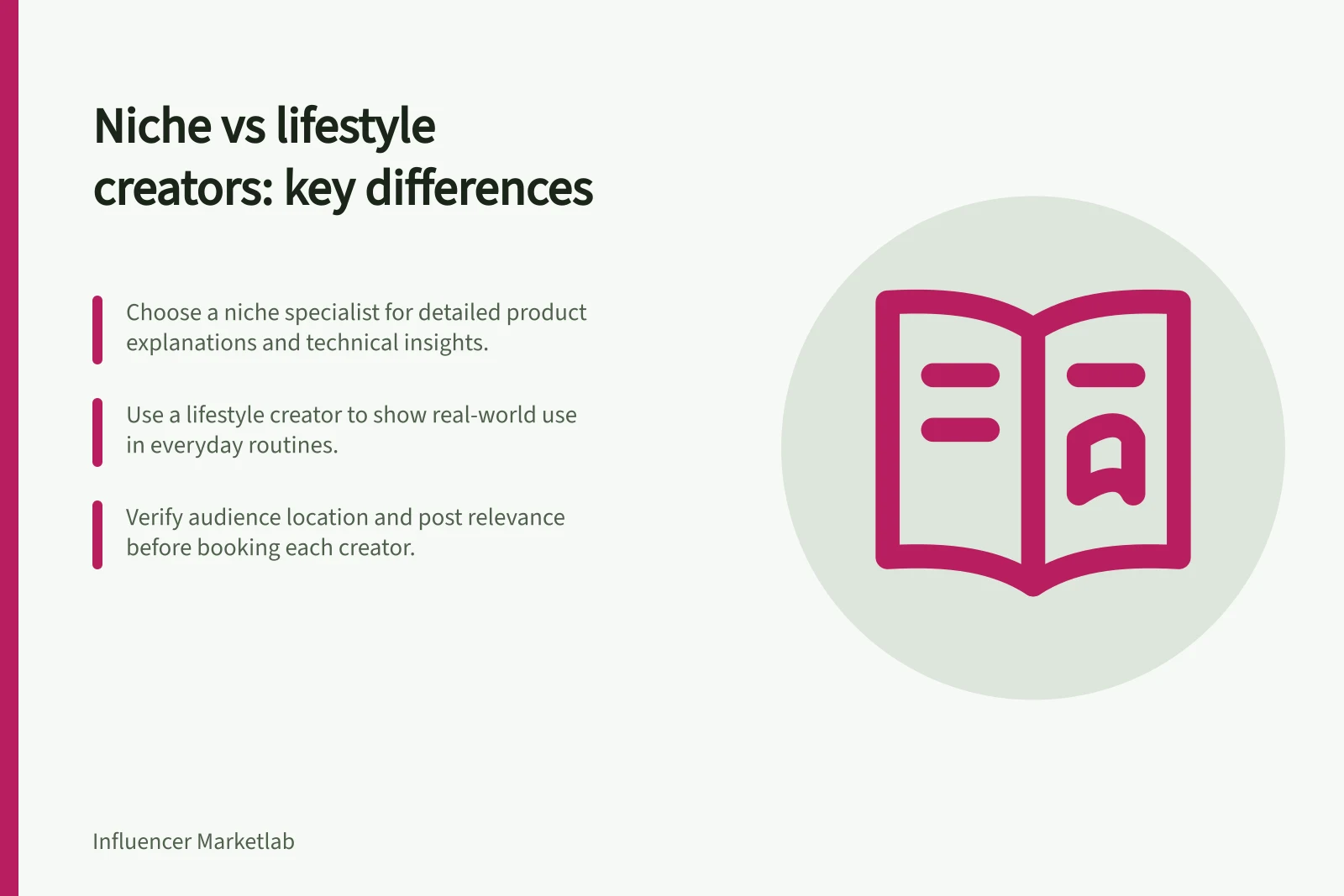
Choose between a niche specialist and a lifestyle creator by the customer question, the content each can make credibly and the evidence behind it.
Choose a niche specialist when the brief depends on detailed category knowledge or a specific use case. Consider a lifestyle creator when the job is to place a product in a broader everyday setting. These are content roles, not performance rankings. Either creator still needs a relevant audience, an honest angle and evidence suited to the proposed post.
Start with what the customer needs to see
Suppose a brand is promoting a hypothetical home coffee grinder. A viewer weighing grind settings, cleaning and fit with their equipment may benefit from a creator who regularly demonstrates coffee gear.
A viewer who has not considered a grinder may find a morning routine helpful if it shows why someone uses one. The first angle offers detail; the second supplies context. The choice depends on the question the content must answer.
Describe the required piece before sorting creators into categories. “Specialist” should refer to what a person can show or explain, not a title in their bio. “Lifestyle” should describe a genuine way the product fits their usual work, not permission to make generic endorsements.
Compare the roles on the same dimensions
| Decision point | Niche specialist | Lifestyle creator |
|---|---|---|
| Useful role | Explain a category choice, process or limitation in detail. | Show where the product fits in a familiar routine or setting. |
| Evidence to inspect | Ordinary category posts, demonstrations and the creator’s handling of technical questions. | Ordinary lifestyle posts, credible product use and the ability to make the offer understandable. |
| Possible brief risk | Detail may assume knowledge a new buyer lacks. | Broad context may leave a decisive product question unanswered. |
| Question before booking | Can this creator explain the point clearly to the intended customer? | Can this creator show a real use without implying expertise or experience they lack? |
These are possible strengths and risks, not findings about all creators in either group. Review each person’s actual work. A lifestyle creator may have deep product knowledge; a specialist may be excellent at a simple introduction.
Check whether the audience and format support the role
Ask for recent results from posts similar to the one you would commission, including their format and reporting period. Request available audience location information if the offer is limited to Australia or particular delivery areas.
An Australian address in a creator profile is not an audience-location measure. Record what is missing.
Inspect viewer questions for clues about the proposed angle. Are people asking how a product works, how it fits a routine, or where it can be obtained? Treat those questions as qualitative prompts.
They do not tell you the size or buying intent of the whole audience. If the brief requires a product demonstration, check that the creator can use the appropriate version for long enough to form a genuine view.
Keep the claim review consistent across both types of creator. The ACCC provides general guidance on avoiding claims that are false or misleading, can require businesses to back up claims they make on social media, and may take compliance or enforcement action for false or misleading claims in social media advertising. A specialist’s authority cannot make an unsupported claim safe; a lifestyle setting cannot turn an untried product into a personal recommendation.
Make the booking decision explicit
Put the customer question, proposed content angle, a relevant ordinary post, a relevant sponsored post, available audience evidence and unresolved limitations beside each candidate. Compare the work and evidence required by the same brief.
A mixed booking makes sense when the pieces have different jobs. The specialist might show the grinder’s setup while the lifestyle creator shows where it fits in their own routine. Give each an honest brief, then review each against its assigned purpose.
Do not add their reported views together and call the total unique people reached. The audiences may overlap and the measures may differ.
If the decisive customer question needs depth, lead with the creator who can provide it. If the question is whether the product belongs in an everyday situation, favour the creator who can show that situation credibly. If neither candidate can answer the question or provide enough relevant evidence, keep searching and revisit the brief if needed.