Brief Writing
Part of Testing and improving influencer partnerships
Comparing demonstration content with personal recommendations
Decide when a creator demonstration or genuine personal recommendation better answers a buyer’s question.
Ask which approach answers the buyer’s uncertainty: a demonstration or a personal recommendation. A demonstration can show an action and its conditions. A recommendation can explain what a creator personally experienced and why they hold a view. Neither format is inherently the better booking.
Give each piece a clear job
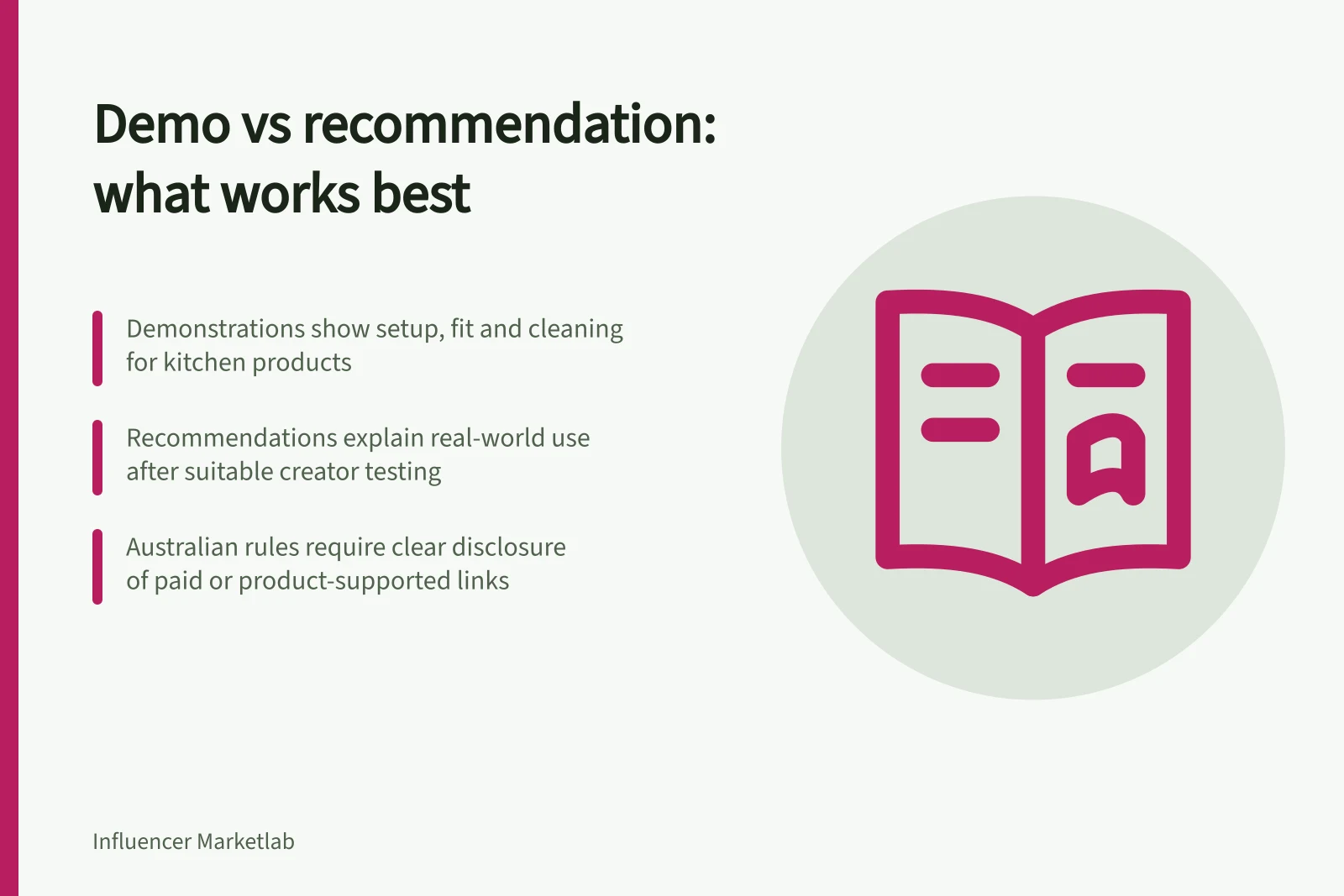
For a hypothetical kitchen product, a demonstration might show setup, what fits inside and cleaning. A recommendation might explain how the creator used it in their own routine and where it suited them or did not. These are proposed angles, not observations about a real product.
If the buyer needs to know whether an item fits a particular shelf, showing the relevant measurement may answer more than general praise. If the question is how it works in ordinary use, a genuine account after suitable use may add context an unboxing cannot. Do not commission a firsthand verdict before the creator has formed one.
| Check | Demonstration | Personal recommendation |
|---|---|---|
| Evidence in the piece | Visible use under stated conditions | The creator’s experience and judgement |
| Brief question | What does the buyer need to see? | What has the creator actually learned? |
| Accuracy risk | A staged result implies broader performance | An opinion implies experience the creator lacks |
These are editorial checks, not evidence that one format performs better.
Plan a comparison the creators can make honestly
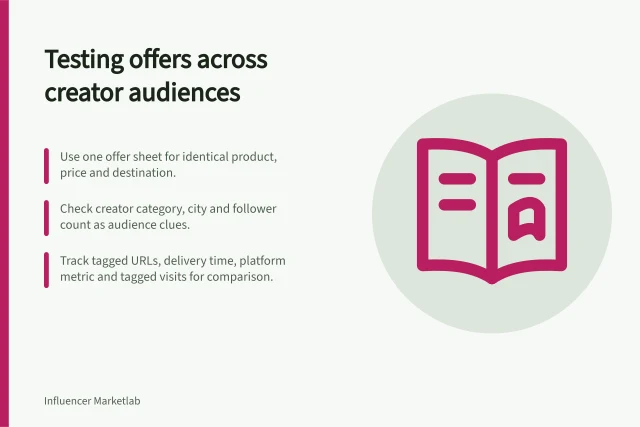
Choose one buyer question and one offer. Agree the product version, destination, intended action and reporting period.
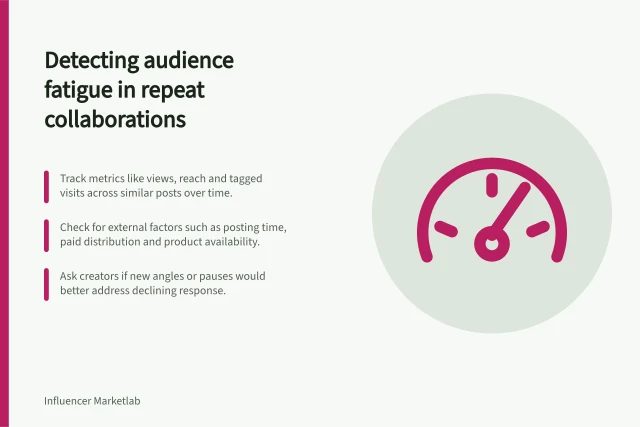
If the same creator makes both pieces after suitable use, the audience may be more comparable, but timing and repeated exposure still affect the result. If different creators make them, record audience and delivery differences rather than assigning the result solely to format.
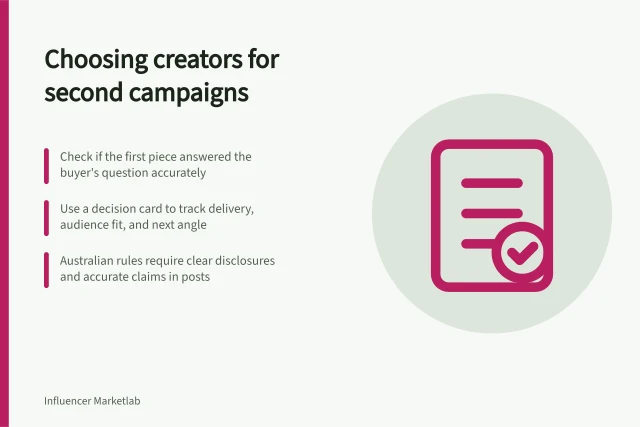
Give creators checked product facts without prescribing a positive verdict. Australian consumer guidance focuses on avoiding claims that are false or misleading, and businesses can be required to back up claims they make on social media. Make a paid or product-supported promotional relationship clear in each finished piece.
Key Compliance Requirements for Influencer Content in Australia
- Clear disclosure of paid relationships
- Required under ACCC guidelines
- Claims must be substantiated
- Businesses must back up claims made on social media
- No misleading or false advertising
- Prohibited under Australian Consumer Law
Review the complete result
Inspect the visuals, spoken claims, on-screen words, caption and destination. A demonstration may omit a condition needed to understand what was shown. A recommendation may be sincere but leave the practical question unanswered. Record those observations separately from viewing figures.
Request comparable reporting periods and preserve metric labels. YouTube provides unique-viewer and audience-retention reporting.
Treat retention reporting as a description of viewing behaviour, not an explanation of why someone stopped, whether they believed a claim or whether the piece caused a purchase.
If the intended action is a visit, compare tagged-link traffic where both placements support it, noting other routes and any paid amplification. Decide whether to use a demonstration, wait for a genuine recommendation, give the next piece a different job, or stop. Tie that choice to the buyer question and the evidence actually available.
Editorial Checklist: Ensuring Honest and Compliant Creator Content
- Inspect visuals, spoken claims, on-screen text, captions, and destination linksEnsure transparency and alignment with factual claims
- Verify that all necessary conditions are shown in demonstrationsAvoid omitting key setup or usage details
- Confirm recommendations address practical user questionsAvoid vague praise without context
- Use comparable reporting periods and metric labelsEnable accurate comparison across content types
- Track tagged-link traffic for visit-based actionsCompare performance where both placements support it