Results Measurement
Part of Testing and improving influencer partnerships
Detecting audience fatigue across repeat collaborations
Investigate possible audience fatigue in repeat creator work without mistaking one weak post for proof.
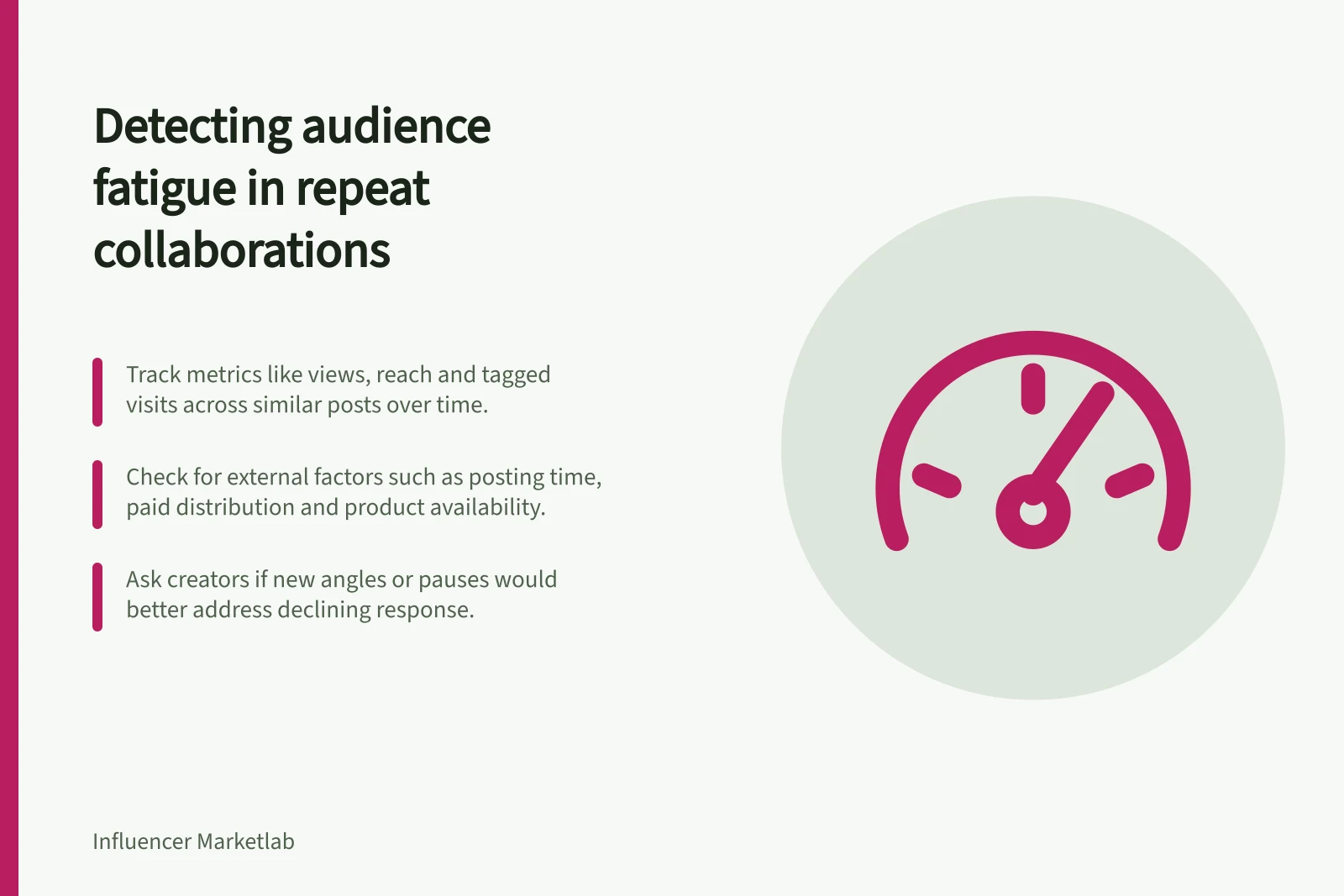
Treat audience fatigue as a possibility when repeat work from the same creator draws less useful response. Look for a pattern across comparable posts and check other explanations before changing the partnership. One quieter post, a lower view count or a few bored comments cannot establish that viewers are tired of the brand.
Build a repeat-post timeline
List each collaboration in date order. Record the format, product, question answered, offer, publishing account and paid distribution. Keep the metric name and observation period beside each result. Add relevant ordinary posts from the same period to see whether a change affected brand work alone or the creator's content more broadly.
Compare posts at a similar age. A recent piece may still be accumulating views. Keep views, estimated unique viewers, reach and tagged visits in separate columns, because they are different measures that should not be treated as interchangeable.
Check what else could explain the decline
Repeated posts answering the same question, recurring requests for a new angle or a fall in the agreed response measure can prompt investigation. Check the product, offer, format, posting time, paid amplification, stock and the creator's wider viewing pattern before attributing that change to fatigue.
Read comments for specific questions. A request for another use case may guide a new brief, but a small visible comment sample does not describe all viewers.
If the creator shares analytics, review any available retention information as one clue about viewing behaviour, not an explanation of why someone left. Viewer categories may add context, but neither directly measures brand fatigue.
Make a bounded next decision
Ask the creator which questions remain and whether another post on the proposed subject would add anything. You might commission a genuinely new use, answer a question left open, or pause. These are possible responses, not proven remedies or a universal posting schedule.
Set the next piece's job before it runs. For a visit objective, use a distinct tagged link where possible and check the destination. Record the resulting visit measure alongside the other evidence.
For an explanation objective, inspect whether the piece supplied new information and which questions followed. Do not describe a change in attributed sales as proof that fatigue was cured. Attributed sales alone do not establish why response changed.
State the outcome narrowly. If repeated posts on the same subject coincided with lower recorded response, say so and name plausible alternatives. If evidence remains thin, a limited new angle or a pause may be more defensible than a confident fatigue diagnosis.