Results Measurement
Part of Measuring the business results of influencer campaigns
Separating paid creator reach from organic brand reach
Separate sponsored creator posts, brand organic posts and paid amplification without counting overlapping audiences twice.
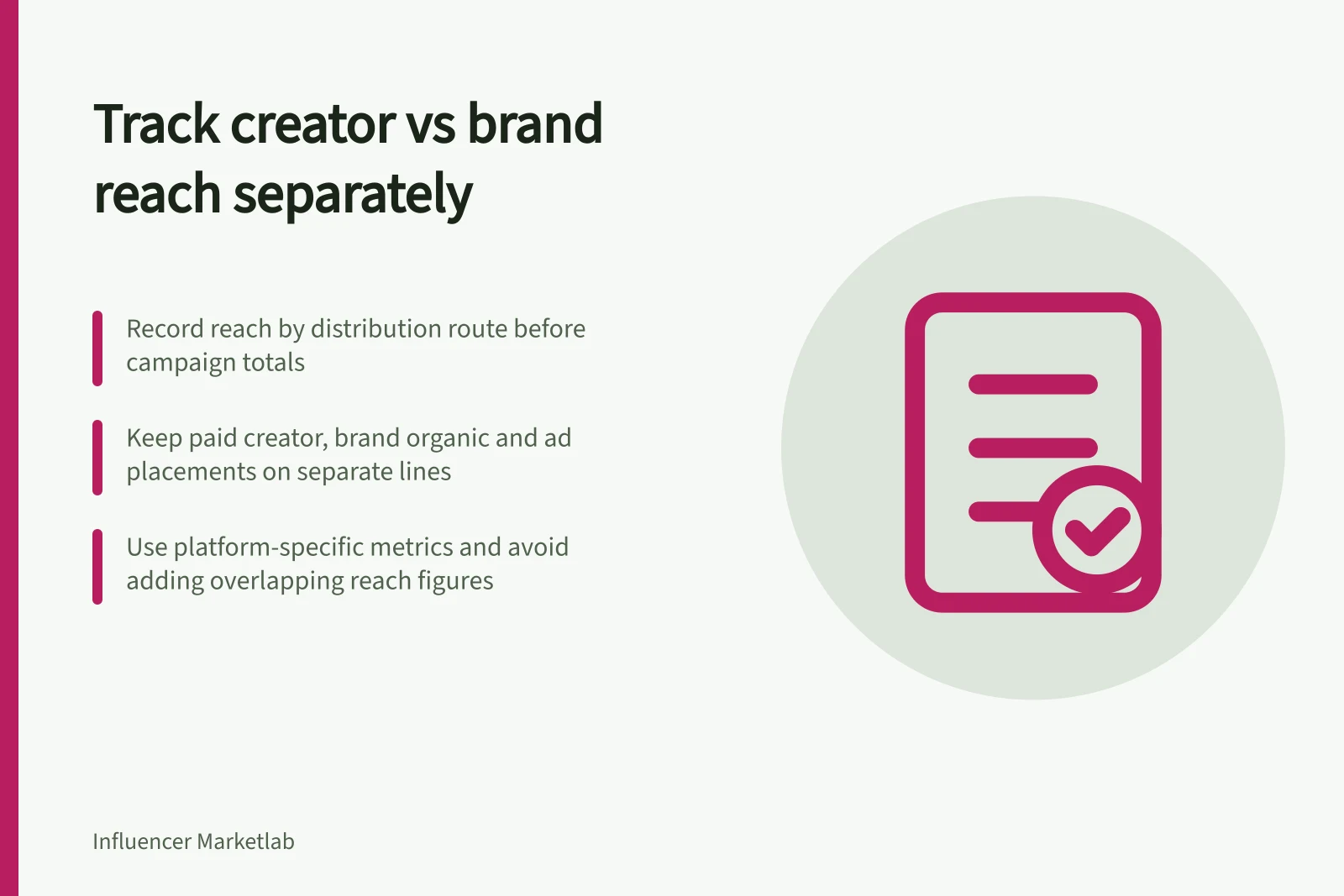
Record reach by distribution route before reporting a campaign total. A sponsored post on a creator’s account, an unpaid post on the brand’s account and an ad using creator content are different placements.
Keep their reported reach, dates and costs on separate lines. Unless a platform supplies a combined unique-audience measure that covers the exact placements, adding their reach figures does not tell you how many distinct people the campaign reached.
Label each placement by what delivered it
“Paid creator” describes the commercial arrangement with the creator; it does not necessarily mean the post was delivered as a platform ad.
A fee may buy creation and publication on the creator’s account. Advertising spend may then distribute the post or asset further. A brand can also publish related content on its own unpaid account.
Use a placement register with the publishing account, asset, platform, reporting period, distribution route and relevant spend. Keep creator fees distinct from media spend.
These are reporting labels for the campaign; platform dashboards may group activity differently.
| Placement | Reach evidence to request | Cost to record |
|---|---|---|
| Sponsored post on a creator account | Available post-level reach, with dates and the metric name. | Creator fee and any separately charged production. |
| Unpaid brand post | Brand-account post-level reach for the review period. | Relevant production or management cost, if included in the campaign budget. |
| Paid ad using creator content | Ad-platform reach and impressions for the specified campaign and dates. | Media spend and any separate content-use or production cost. |
For each figure, retain its metric label and reporting period. Check whether the creator’s post-level figure includes paid promotion of that post. If it cannot be separated, label the figure as mixed rather than assigning it wholly to unpaid distribution.
Compare like measures, then handle overlap
Reach and impressions are not interchangeable. TikTok Ads Manager defines reach as unique users shown an ad at least once and impressions as the number of times ads were shown. These definitions apply to its ads, not every creator’s post analytics.
Platform audience metrics may use different definitions and reporting methods, so check the relevant documentation before comparing figures. Keep the platform and metric beside each number.
Audiences can overlap across creator posts, brand posts and ads. Adding three placement reach figures can count a person more than once. Show the figures separately and say when combined unique reach is unavailable.
Use a platform’s combined measure only if its documented scope covers the placements being reported; do not invent an overlap percentage.
Align dates, market and format as far as the reports allow. A brand post measured for a month is not directly comparable with an ad measured for two days. A creator living in Australia does not establish that all reported viewers were in Australia.
Comparison of Reach Metrics Across Distribution Routes
- Sponsored Post on Creator Account
- Unique users shown post (platform-specific reach)
- Unpaid Brand Post
- Reach from brand account analytics (period-specific)
- Paid Ad Using Creator Content
- Impressions and reach from ad platform (campaign-level)
Report the useful answer
State which routes delivered the reported exposure and which figures may overlap.
For example: “Creator posts, brand organic posts and paid amplification are reported separately; combined unique campaign reach was not measured.”
The reach record can show distribution, but it cannot establish which route caused a sale.