Campaign Strategy
Part of Testing and improving influencer partnerships
Testing the same offer with different creator audiences
Compare creator audiences around one offer while keeping delivery differences, audience evidence and tracking limits visible.
To compare creator audiences, hold the customer offer and intended action steady. Then record where the creators’ audiences and delivery differ.
The result can suggest which audience merits another booking. It cannot by itself prove that audience differences caused a sales gap: the creators and their posts differ too.
Define the audience distinction
In a hypothetical comparison, a homewares brand might consider renters furnishing a first flat and people reorganising an established home for the same compact shelf. Both would receive the same product, price conditions and destination.
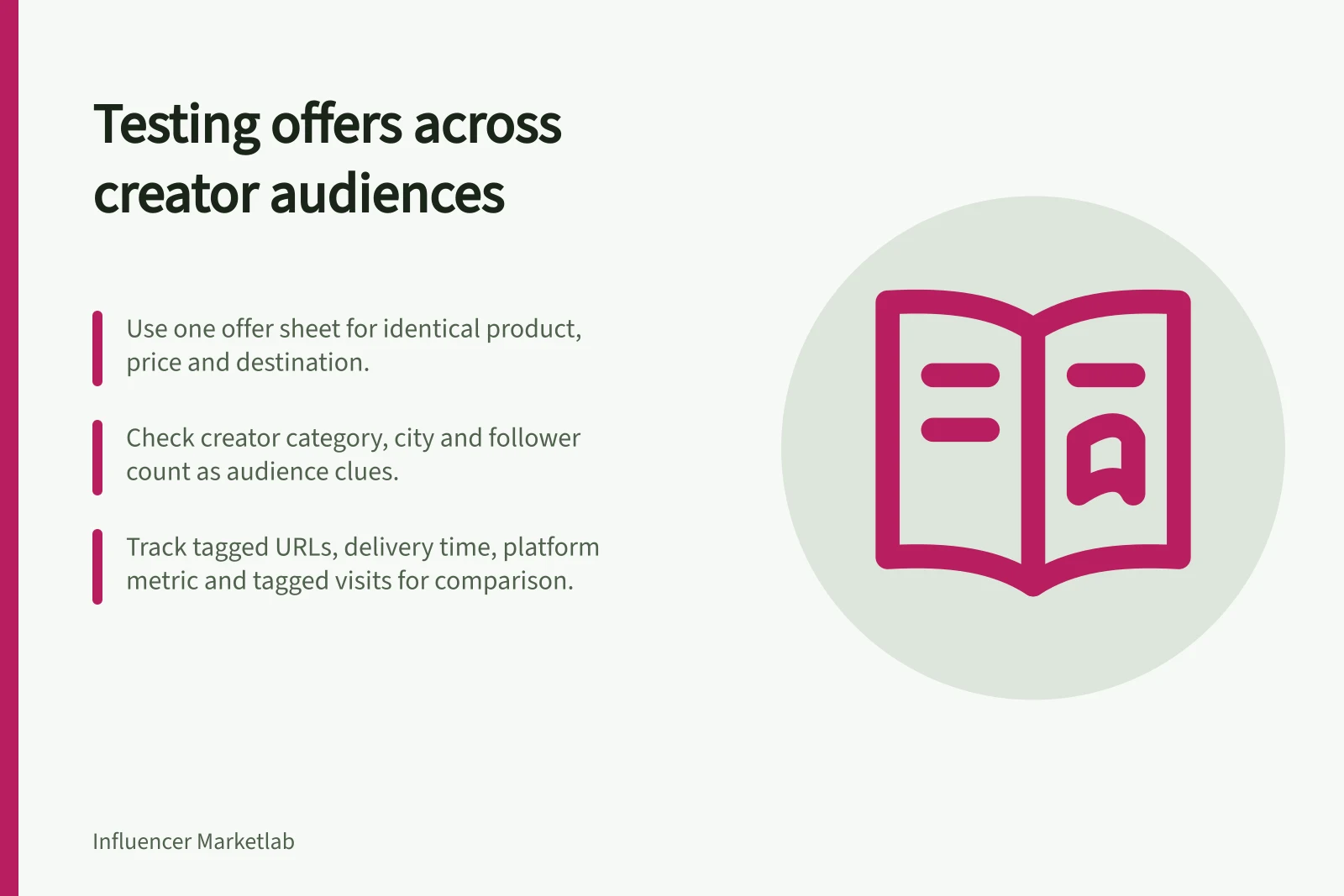
Check the evidence behind each audience description. A creator’s category, home city and follower count are starting clues. Ask for recent results from comparable content with the format, metric and dates visible.
If Australian reach matters, treat geography figures as an imperfect audience signal rather than a count of Australian buyers.
Keep the offer consistent
Use one offer sheet for the exact product, included items, eligibility, current conditions and destination. Give both creators the same customer question and intended action while allowing each to speak naturally.
Agree comparable deliverables and observation periods where practical. Do not force identical scripts or a personal claim a creator cannot honestly make.
Record the audience proposition, offer version, post format, publication time, paid amplification, platform metric and period, and tagged visits where available. Differences in these fields may explain a difference in response.
Review each finished post for accurate offer claims and a clear commercial relationship.
Key Metrics Summary for Creator Audience Test
- Consistent Offer Used
- Yes
- Same Customer Question
- Yes
- Distinct Tagged URLs
- Yes
- Paid Amplification Applied
- No
- Post Format Consistency
- Natural delivery only
Interpret the response
Where clickable links are available, use distinct but consistently tagged URLs and check their destinations. Tagged URLs can help report traffic arriving through them when tagging is implemented. They cannot identify everyone who saw the content and later arrived through another route.
Keep code use and business orders separately labelled; one order can involve both a link and a code.
Compare the primary measure chosen before publication. For a visit objective, read tagged visits alongside each post’s delivery and any destination problems.
For an explanation objective, inspect whether the content answered the customer question and what viewers asked next. A higher view count alone does not establish stronger audience fit.
Check for stock interruptions, offer changes, different formats, timing and paid distribution before choosing a winner. If those differences matter, state only what was observed and run a narrower next comparison.
End the review with the audience that appears promising, the evidence for that judgement and the uncertainty the next booking must resolve.