Creator Sourcing
Part of Testing and improving influencer partnerships
Deciding which creators deserve a second campaign
Use the first campaign’s content, audience evidence and delivery record to decide whether to book a creator again.
The first campaign should give you reason to expect another useful piece before you book a second. Review the original brief, the creator's delivery, the audience evidence, and the proposed next angle. A large view count or code total alone is too thin a renewal rule.
Judge the first piece against its job
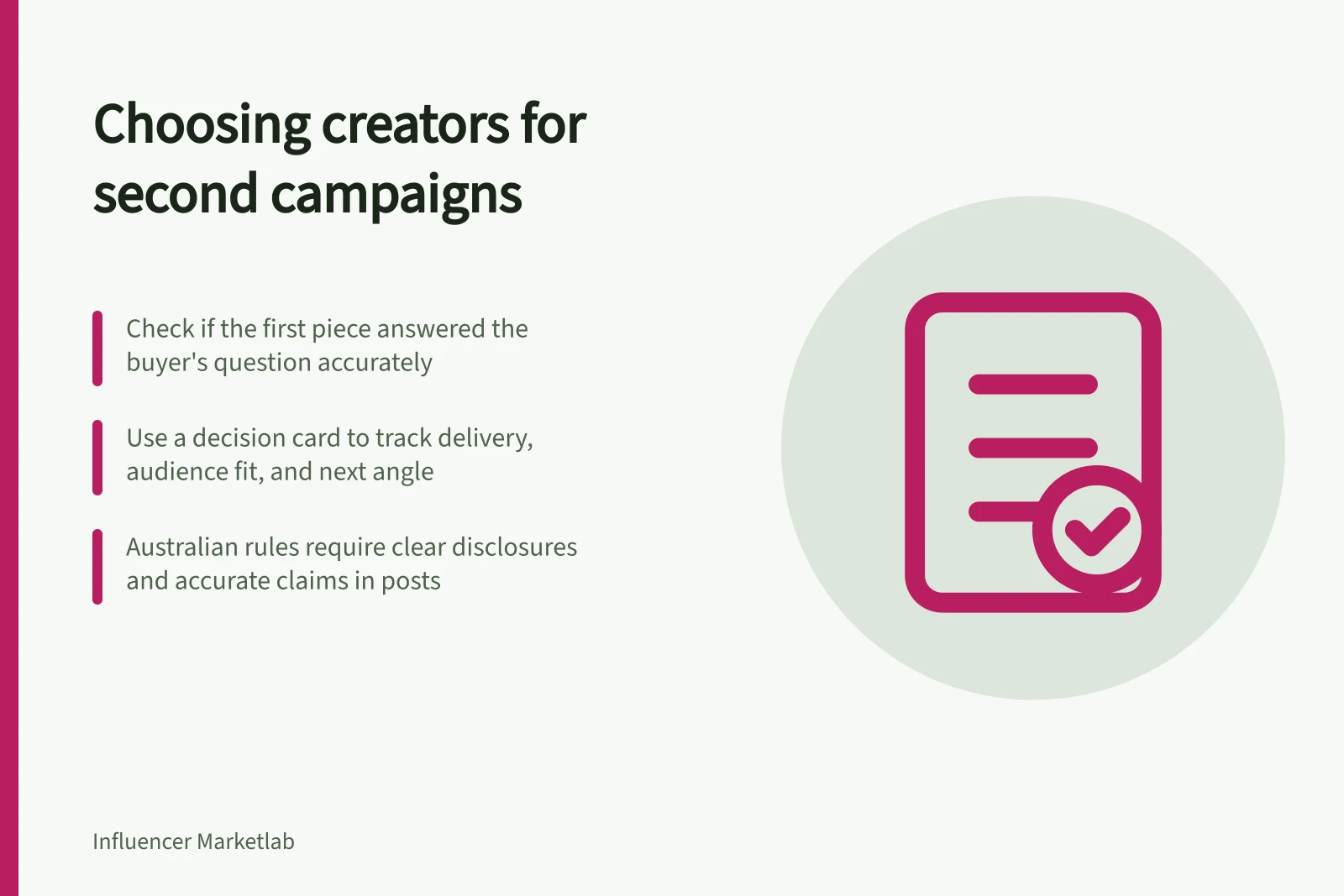
Did the published piece answer the buyer's question accurately when the brief asked for a product explanation? If it introduced an offer, could viewers understand the available action? Compare the final asset, account, and publication timing with what was agreed. Record brand-side conditions too: an unavailable offer page or late product facts should not automatically count as creator failure.
Keep performance figures in their original scope. Beside the result, retain the platform metric, format, dates, and paid amplification.
When implemented, a tagged link can identify visits through that route; it cannot count every viewer influenced by the post. Attribution credit is a reporting allocation, not a count of sales proved to be caused by the creator.
Decide what another piece would add
Which buyer question remains? The creator might show a detail viewers asked about or a different use they have genuinely experienced. Ask what they would be comfortable making and what access or time they need. Do not require a recommendation they cannot honestly give.
Use a short decision card:
| Question | Evidence to record |
|---|---|
| Did the first piece do its job? | Final content, original question and relevant response. |
| Is the audience plausible for the next offer? | Available recent audience and post evidence, with metric and location limits. |
| Did the work run well? | Agreed delivery, corrections, timing and both parties’ delays. |
| Would another piece help? | A distinct, honest angle. |
| Are new terms workable? | Scope, fee, dates and any separate brand-use permission. |
The card supports one rebooking decision; it is not a universal score for creators with different briefs.
Repeat, revise, investigate or stop
Repeat if the first piece served its job, the evidence is adequate for the next brief, and a worthwhile angle remains. Agree fresh work and a review point. Do not assume the first fee or content-use permission covers another campaign.
Revise if a fixable condition weakened otherwise useful work, such as a broken destination or insufficient product time. State what must change before rebooking.
Investigate if a material audience or outcome measure is missing; request a labelled report or propose a narrower booking. Stop if the offer cannot be represented honestly, audience fit is too uncertain for the investment, or no second question merits a post.
Check the next sponsored piece's claims and commercial presentation afresh. Australian guidance requires accurate social media claims and clear disclosure of a promotional relationship. Record why the creator is being invited back and what the second piece must answer.
Next steps after evaluating a first campaign
- RepeatIf the first piece served its job, evidence is adequate, and a worthwhile angle remains. Agree fresh work and a review point. Do not assume the first fee or content-use permission covers another campaign.
- ReviseIf a fixable condition weakened otherwise useful work, such as a broken destination or insufficient product time. State what must change before rebooking.
- InvestigateIf a material audience or outcome measure is missing; request a labelled report or propose a narrower booking.
- StopIf the offer cannot be represented honestly, audience fit is too uncertain for the investment, or no second question merits a post.