Campaign Strategy
Part of Influencer marketing strategy for Australian brands
When influencer marketing is the wrong channel for a product
Use a practical no-go test to spot products and offers that need fixes or a different channel before an influencer campaign.
Defer an influencer campaign when a creator cannot represent the product honestly or the business cannot support the promise a post would make. An unavailable offer, unverified claim, broken next step or uncertain audience fit is a reason to fix the problem before booking. Then reassess whether creator content can help the intended buyer.
Use a clear no-go test
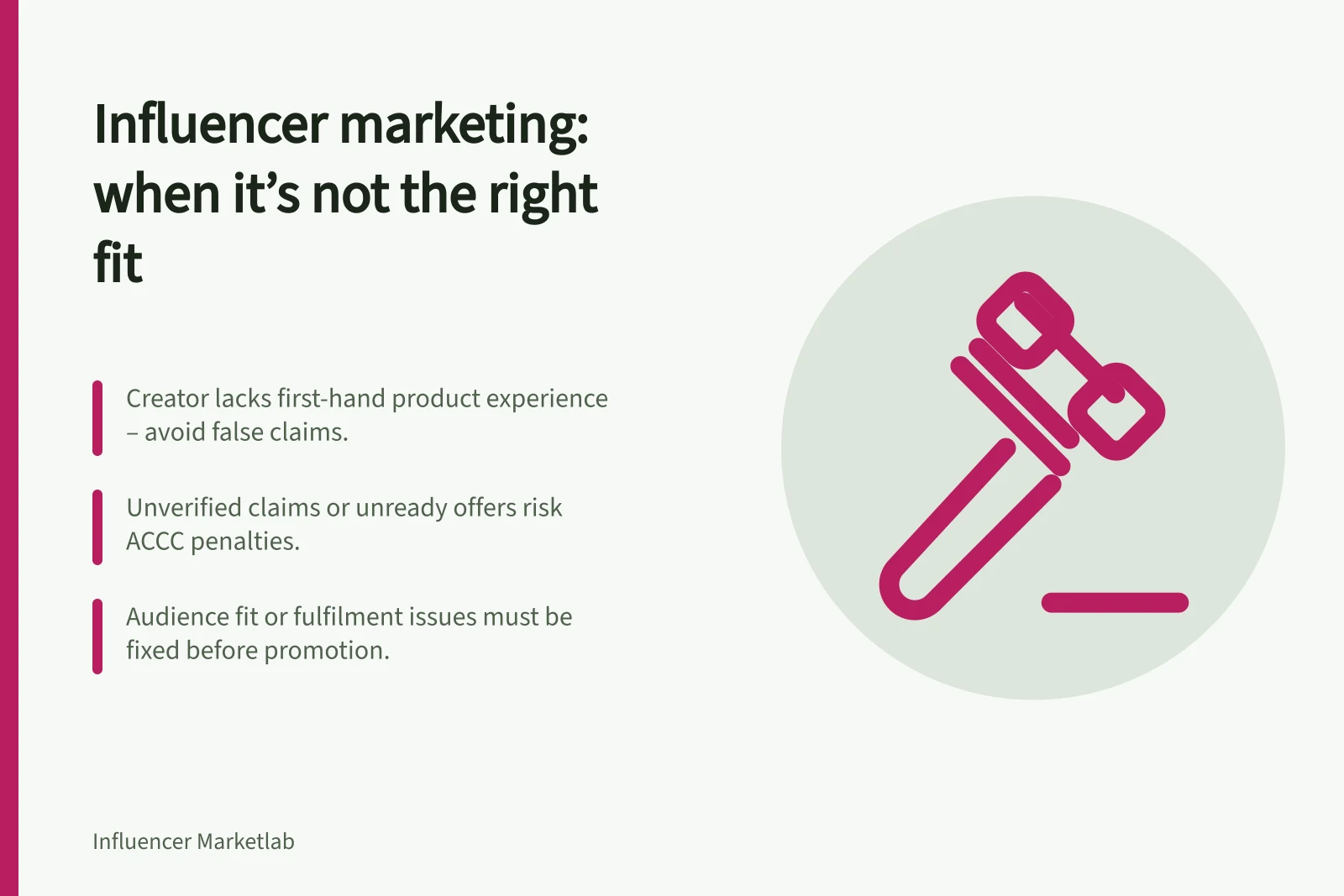
The product cannot be represented honestly. If a creator has not used a product that requires first-hand experience, do not commission a personal recommendation.
If a demonstration needs equipment, access or time the creator will not have, consider another piece only if it can answer a real customer question without implying experience they lack. Avoid claims in a review that are false or misleading; the ACCC can require businesses to back up claims made on social media.
The commercial offer is not ready. A post can send people to a page with the wrong variant, an unavailable item or an inaccurate delivery promise. Check the exact product, price, service area and destination before commissioning purchase-focused content.
If the product, price, service area or destination is still changing, hold the promotion or use an accurate message that does not depend on those details.
The buyer’s question belongs elsewhere. A creator cannot repair a confusing checkout, resolve a disputed warranty statement for the business or make an unsuitable product suitable. If customers first need a corrected product page, a support answer or a specialist discussion, do that work before paying for exposure.
The relevant audience cannot be established well enough. An Australian creator may have viewers outside the service area. Ask for audience evidence suited to the brief. If geographic fit is essential and the available evidence is too weak, compare channels that offer clearer reach before committing the budget.
Choose the next action
| What blocks the creator campaign? | More useful immediate action |
|---|---|
| Product facts or claims remain disputed | Resolve and document them before promotion. |
| Stock, booking capacity or destination is unreliable | Fix fulfilment and the customer path, then set a release check. |
| Customers need a technical answer | Publish a verified explanation or arrange a qualified specialist discussion. |
| Audience fit cannot be established | Research the intended buyers and compare available channels. |
| The team expects immediate, fully attributable sales from every view | Reset the objective and reporting standard before spending. |
Reassess when the blocker changes
A “no” may be temporary. Once the product is available, its claims are supportable and the customer path works, ask whether a creator can add a genuine use case, demonstration or audience question that the brand cannot provide as effectively on its own. If so, define a small brief and a review date.
Keep paid and gifted arrangements clear. In an ACCC media release dated 24 March 2026, the ACCC said that a commissioned, gifted review was presented as an unpaid review and that another review was edited to remove negative content. The practical check is to preserve the creator’s genuine view and ensure viewers understand the commercial relationship.
If the campaign would need a creator to hide a limitation, guess a fact or promise an action the business cannot fulfil, do not run that campaign. Repair the proposition or choose a channel better suited to the customer’s present question.