Creator Sourcing
Part of Influencer marketing strategy for Australian brands
Micro-influencers or macro-influencers: matching reach to the brief
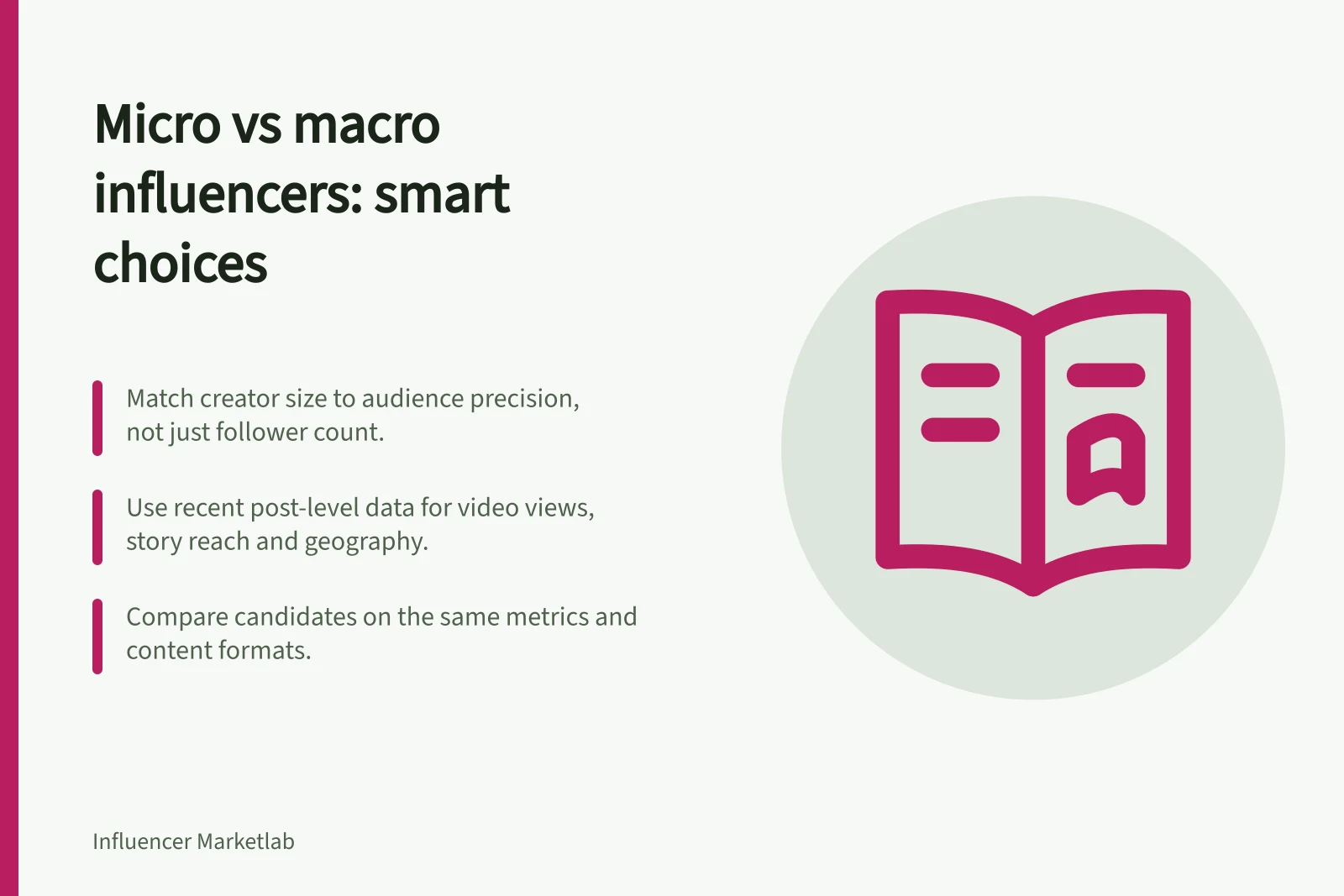
Compare smaller and larger creators using audience fit, recent comparable reach, location and the content your brief needs.
Choose between smaller and larger creators by the audience the brief must reach and the content those creators can make. The labels "micro" and "macro" do not settle those questions. Follower totals alone cannot show how many suitable people will see a post, so define the audience and content job before comparing candidates.
Turn the brief into a reach requirement
A broad announcement may benefit from a creator whose recent posts reach many relevant viewers. A specialised explanation may benefit from someone whose regular audience asks detailed questions about the subject. A city-limited offer needs viewers in that city, whatever the creator's national profile.
These are reasons to investigate candidates, not rules that one size always wins.
Avoid a universal follower threshold. Agree what "smaller" and "larger" mean within this campaign's candidate pool, then request recent results from comparable posts where available. Compare the same format and reporting period where possible. Video views, story reach and account followers answer different questions.
| If the brief needs… | A smaller creator may be worth testing when… | A larger creator may be worth testing when… |
|---|---|---|
| A precise use case | Their usual content and audience questions closely match it. | Their broad audience still includes people with that need. |
| A wide announcement | Several relevant communities offer distinct angles. | Recent comparable posts show suitable reach at the required scale. |
| A local offer | Available audience evidence supports reach in the service area. | The relevant local share is sufficient despite a wider audience. |
| Several creative angles | Different creators can make genuinely different pieces. | One creator can explain the offer credibly in the required formats. |
These are selection prompts, not performance findings. Either route can fail if the audience or content is wrong.
Compare evidence on the same basis
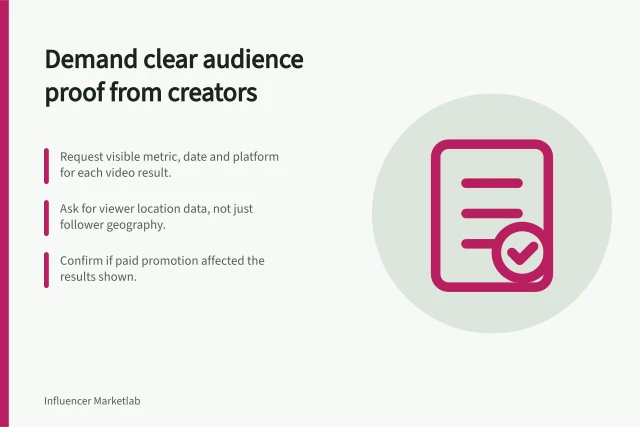
Request recent post-level views or reach for the proposed format, audience geography where available, ordinary and sponsored content examples, availability and a quote for the actual work. Ask when each figure was captured. TikTok One, for example, describes search filters for creator and audience country or region, follower count, median video views and engagement.
Those are TikTok One fields, not a promise that every account can access them. Country or region filters do not establish a creator's audience in a particular city, and past metrics do not forecast a future post.
Read audience responses in context. Are viewers asking about a relevant problem? Does the creator answer accurately? A large comment count may reflect another topic.
If the brief needs a narrow audience, ask whether two candidates are likely to reach the same people; adding their individual reach figures does not establish unique campaign reach.
Key Metrics to Request from Creators
- Recent Post-Level Views
- Required for proposed format
- Story Reach
- Audience geography where available
- Account Followers
- Contextualised with engagement trends
- Geographic Audience Data
- Country or region filters (TikTok One)
- Content Examples
- Ordinary and sponsored posts
Make the choice visible
Put each candidate on one comparison sheet: proposed role, audience fit, recent comparable results, geography, content example, fee and unresolved questions.
If a larger creator offers broad exposure but little evidence of relevance, seek better evidence or change the brief. If several smaller creators look promising, account for coordination work and check whether each adds a distinct audience or explanation.
A first booking could be a bounded comparison: give candidates the same audience question, agree comparable deliverables and review each against the objective. This is a proposed evaluation, not a test reported here. Record why the chosen mix fits the brief, what evidence is missing and what would change the next booking.