Results Measurement
Part of Product gifting and seeding programmes
What to do when a gifted product receives no post
First check what was agreed.
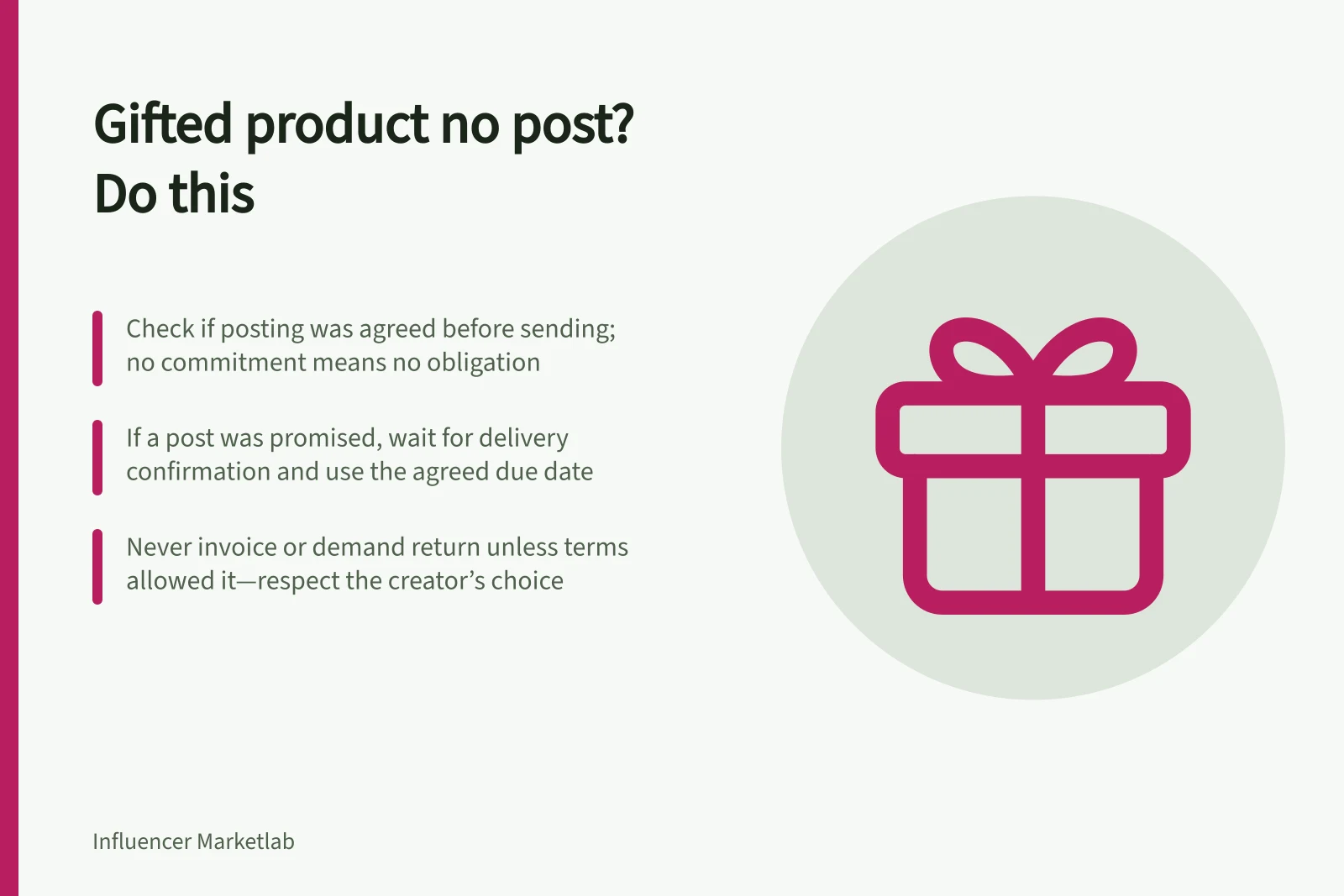
First check what was agreed. If the product was sent without a posting commitment, no post is a possible outcome. Treat the shipment as a seeding cost and learn from it; do not send a demand disguised as a friendly follow-up.
If you want a gifted post to be a deliverable, get the creator’s clear agreement to the deliverable, due date, disclosure and content-use terms before sending. Do not add a posting obligation after delivery or assume silence lets you invoice the creator or demand the product back.
Pros and Cons of Sending a Gifted Product Without a Posting Obligation
- ProsLower risk of legal non-compliance under the Australian Consumer Law (ACL); builds goodwill; allows creators to share authentic feedback if they choose.
- ConsNo guaranteed content output; may be perceived as wasted spend if no post is made; harder to measure return on investment without clear deliverables.
Respond according to the arrangement
For an unsolicited or no-obligation gift, one considerate check-in can confirm delivery and offer product information. Make clear that a public mention is optional. Silence may mean the item was irrelevant, difficult to use, delayed or not a priority. Do not assume the creator owes an explanation.
Wait until delivery is confirmed and the creator has had a reasonable opportunity to use the product. If a posting deadline was agreed, use that date; if none was agreed, do not invent one after the fact. Send one check-in, then one close-out note if there is no reply, and stop chasing.
Example message: Hi [name], just checking [product] arrived safely. Let me know if you need product information; there is no expectation to post, and no reply is needed if all is well.
If the creator accepted a paid or gifted deliverable, refer to the agreed timing and ask whether they need information or a revised schedule. If the deadline has passed, point to the agreed terms and ask for an update; do not retroactively impose terms on a no-obligation gift. When a product is exchanged for content, the relationship should be disclosed.
The Australian Consumer Law (ACL) applies to influencers engaging in trade or commerce, as well as brands and marketers using influencers to advertise online. The ACCC says businesses must not mislead or deceive consumers, and warns that failing to take reasonable steps to prevent consumers mistaking sponsored posts for organic content may break the law.
On 7 December 2023, the ACCC reported that 81 per cent of the 118 influencers in its sweep had posts raising concerns under the ACL for potentially misleading advertising. A common issue was inadequate disclosure where influencers appeared to receive payment, gifts or other incentives to promote brands, products or services.
On 24 March 2026, the ACCC reported that Tomsem Consolidated Pty Ltd, trading as PhotobookShop, had paid $39,600 in penalties after receiving two infringement notices over alleged misleading influencer reviews posted on Instagram. Between August 2024 and September 2025, it commissioned reviews and, on 107 occasions, instructed influencers not to disclose that free products—valued at around $50 to $400—were payment for creating them.
Key Statistics on Influencer Advertising Compliance in Australia
- 81%Percentage of influencers with ACL concerns
- $39,600Penalty paid by PhotobookShop
- 118Number of influencer posts reviewed by ACCC
- 107Number of misleading review incidents at PhotobookShop
Improve the next selection
Check whether recipients were a good fit, whether the product was usable without extra purchases, and whether the brief explained any setup. Record delivery problems and responses without treating every non-post as a rejection of the item. Compare the full program cost with the value of published work and relationship learning over time.
For close-out, record the agreed terms, delivery status and contact attempts, note the outcome, and close the file once any agreed deliverable is resolved or there is no further response after the final note. Do not invoice or seek the product’s return unless the creator accepted terms that provide for that outcome; get advice if a commitment is disputed.
If a creator later posts independently, ask permission before reposting, editing or advertising with their material. The original gift does not itself settle usage rights. Keep the response respectful; a forced post is unlikely to help either the audience or the brand.