Creator Sourcing
Part of Product gifting and seeding programmes
Choosing products worth sending to creators
Choose a seeding product because a creator can use it credibly and show something their audience wants to understand.
Choose a seeding product because a creator can use it credibly and show something their audience wants to understand. A high retail price or a new launch alone is not a good selection rule.
Match the product to the creator's work
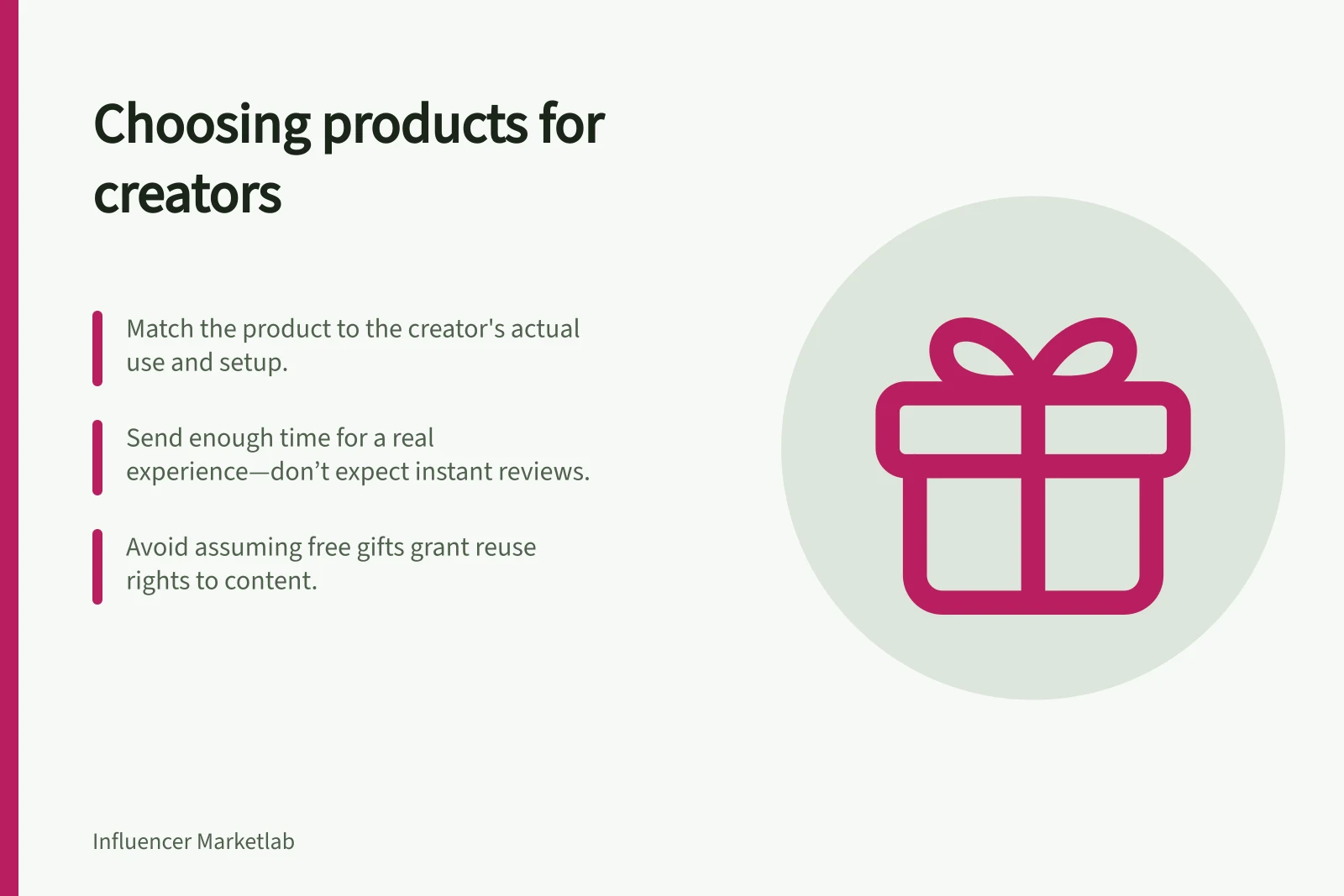
Read several recent posts. Does the creator already discuss the problem this item solves? Can they use it in their normal setting, with the equipment or conditions it requires?
For a product with multiple versions, send the one that fits the creator's actual use and state what is included. If they need an accessory, either supply it or explain the dependency before shipping.
Allow enough time for a real experience. A product that needs installation, repeated use or professional setup cannot be evaluated fairly the day it arrives. Send factual specifications and safe-use instructions, but leave the creator's response open.
Decide what success can mean
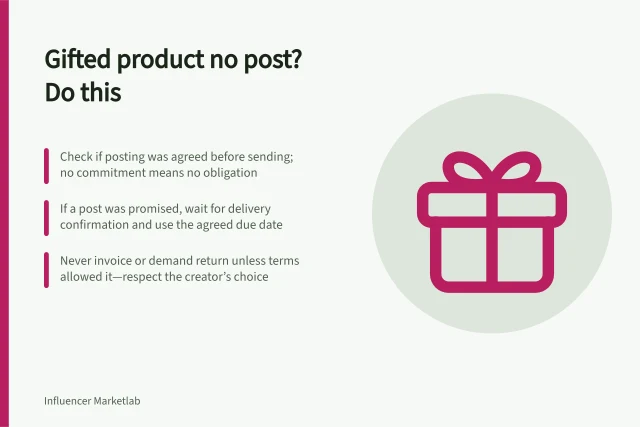
If there is no posting obligation, a creator may choose not to mention the product. That is part of seeding, not a breach.
If a deliverable is required, make it a commissioned collaboration with explicit terms and disclosure. The ACCC's PhotobookShop action illustrates the risk of presenting reviews commissioned in exchange for free products as unpaid organic opinions.
Record what each shipment costs and what the team learns from reactions. A smaller set of highly relevant recipients can be easier to support than a large mailing list of weak matches.
Do not infer campaign performance from one creator's response. Do not assume a gift entitles the brand to reuse their content.
Seeding vs Commissioned Collaboration: Key Differences
- Nature of Engagement
- Product sent for organic use and feedback
- Creator Obligation
- No requirement to post or disclose
- Disclosure Requirement
- Not required if no compensation or expectation
- Content Ownership
- Brand cannot reuse content without permission
- Risk of Misleading Claims
- High if presented as genuine opinion without disclosure