Creator Sourcing
Part of Working with B2B influencers and industry experts
Evaluating practitioner credibility in a B2B creator
Assess a B2B creator’s relevant practice, explanations, limitations and commercial interests before commissioning expert content.
Evaluate a B2B creator against the specific decision your audience faces. Look for relevant work they can explain, evidence they can identify and a willingness to state limits. A title, follower count or polished presentation cannot establish that the person has practised the task in your brief.
Define the expertise the brief needs
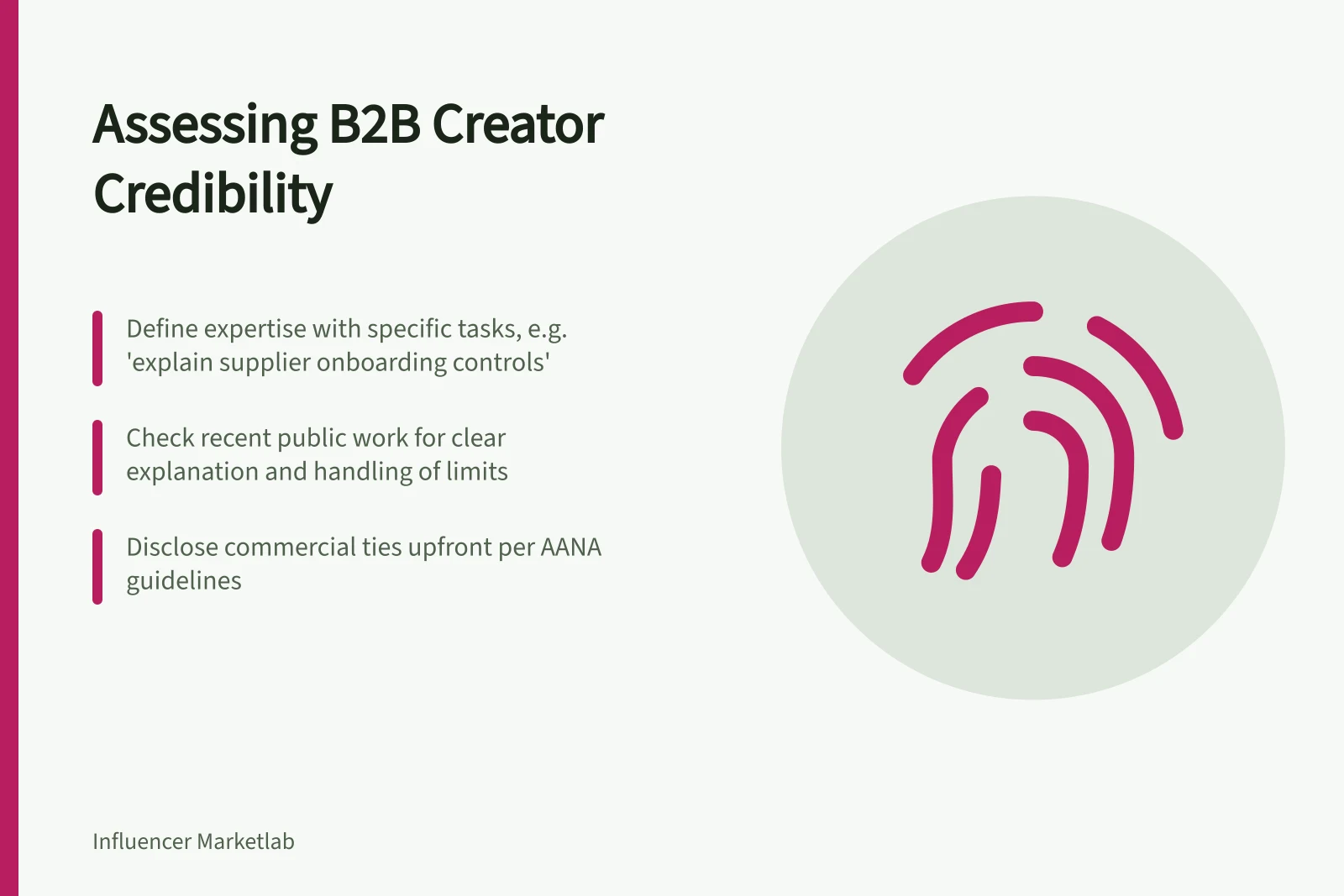
“Understand procurement” is broad; “explain how a team checks supplier onboarding controls” is assessable. Separate experience using a process, advising on it and reporting on it. Each can support useful content, but they are different claims of expertise.
Ask which part of the topic the candidate has handled personally, when they last did so and which conditions may have changed. They should be able to explain a decision path without disclosing a client's confidential information. If their experience is adjacent, narrow the brief to what they can accurately discuss.
Examine the work
Read several recent pieces, including ordinary work produced without a sponsor. Look for the question each piece answers, the basis for its conclusions and how the creator handles exceptions. Public work can show the quality of an explanation; it cannot verify every claim in a biography.
| Check | Evidence to seek | Remaining uncertainty |
|---|---|---|
| Relevant practice | Work history and a process the person can explain | Whether it fits every buyer setting |
| Explanation | Recent talks, posts or articles on the issue | Whether the commissioned piece will be equally useful |
| Treatment of limits | Examples of qualifications or corrections | Limits absent from the sample |
| Commercial interests | Disclosed sponsorships and advisory roles, followed by a direct question | Interests not yet disclosed |
Test the proposed contribution
Give the candidate the audience question and checked product facts. Ask for an outline of what they would examine, which claims need verification and what they would leave unresolved. For a hypothetical software integration, a useful outline might ask about data ownership, failure handling and the operating team's capacity before discussing features. That is an example of a question path, not a product endorsement.
Distinguish the expert's own observation from information supplied by the brand. Identify the environment and version behind any demonstration. A prediction about buyer results needs evidence and suitable qualifications. The ACCC can require businesses to back up claims about their products or services and can investigate misleading conduct.
Resolve interests and disclosure
Ask about relevant clients, vendor relationships, advisory roles and planned sponsorships. A connection does not automatically rule someone out, but it may affect the brief and how the audience interprets the piece.
Agree how the commercial relationship will be clear in the finished placement. AANA guidance calls for disclosure that is upfront, clear and obvious.
Give the creator a way to flag factual errors without being pressed to adopt a favourable opinion. If the central claim cannot be supported, change the claim or the candidate. Record why the person fits this topic and which limits the finished piece must preserve.
ACCC Guidance on Misleading Claims and Influencer Disclosures
- ACCC Authority
- Can investigate misleading advertising and require evidence for claims
- Disclosure Standard
- Must be upfront, clear and obvious (AANA guidance)
- Enforcement Action
- Businesses must back up product/service claims with evidence