Brief Writing
Part of Writing influencer briefs that leave room for creativity
What to include in a product launch creator brief
Use this product launch creator brief checklist to cover verified facts, product access, the offer, publication timing and release control.
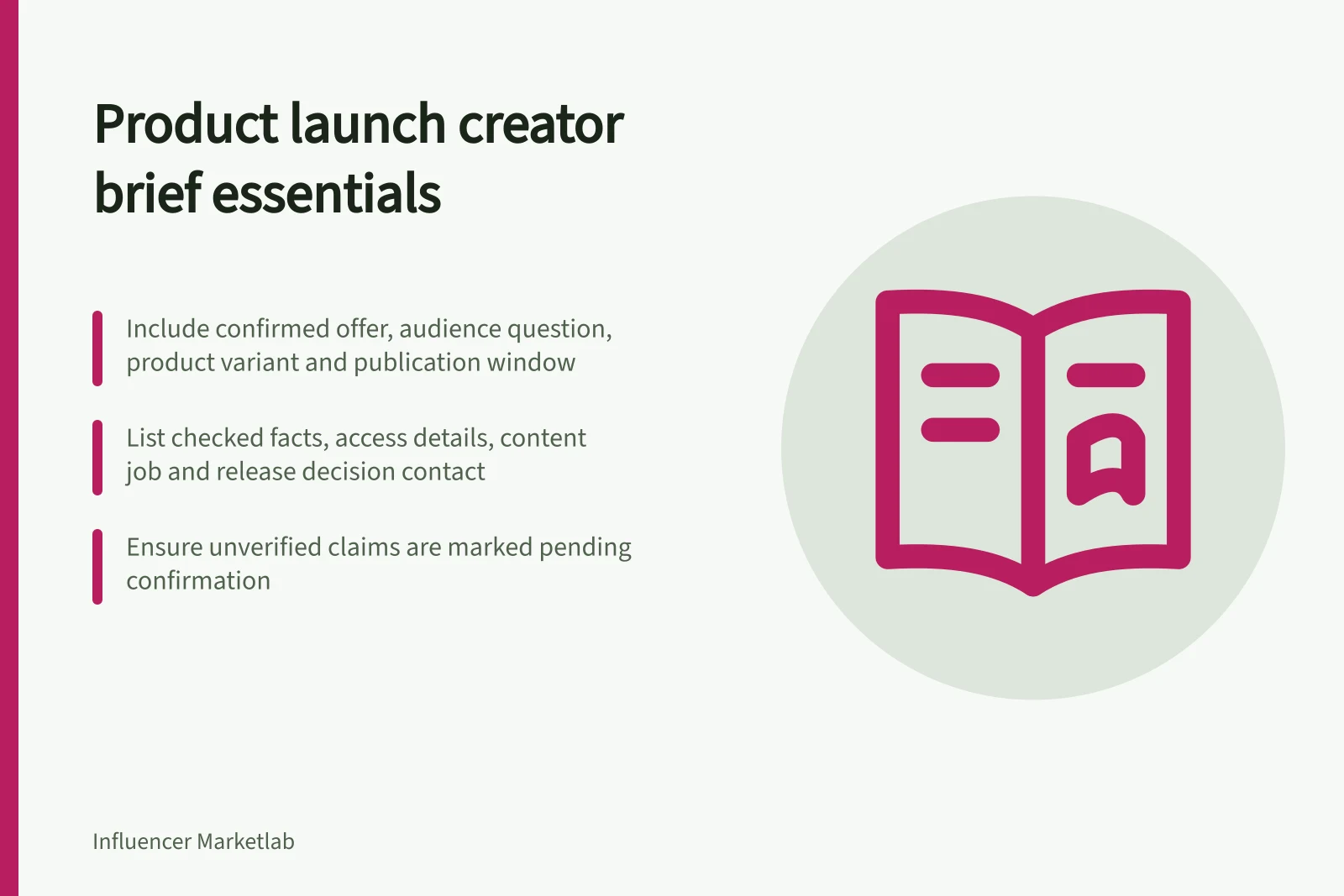
A product launch creator brief should set out the confirmed offer, the audience question, the exact product the creator can use and a publication window. It should identify provisional details and name who can say whether the approved piece may go live. Those inputs let the creator propose a story without guessing what customers will receive.
Give the piece one job
State what viewers should understand: what the new product is, how a feature works or how a new version differs. Choose one main question per deliverable; ‘announce the launch’ does not tell a creator what viewers need to learn.
Include the intended audience and an available next action, such as viewing a product page, joining a waitlist or buying a specified variant. If the product cannot yet be ordered, leave out any purchase instruction.
Put these inputs in the brief
| Input | What the creator needs |
|---|---|
| Product identity | Exact model or variant supplied, what is included and any material difference from the retail version. |
| Checked facts | Specifications, functions the creator may demonstrate and evidence or limits for proposed claims. |
| Offer | Current price or promotion wording, availability area, destination and material conditions. |
| Access | Delivery date, setup help and time for genuine use where a personal view or demonstration is requested. |
| Content job | Audience question, essential point and room for the creator’s own angle. |
| Publication | Draft, feedback and posting windows, with a named time zone if timing matters. |
| Release decision | Contact who confirms the current facts and gives a clear release or hold instruction. |
| Commercial terms | Agreed assets, account, fee, disclosure and any separate brand use. |
Mark an unconfirmed fact as awaiting confirmation, name its owner and keep the affected claim out of the piece until it is checked. Australian social media promotions must not make false or misleading claims about products, prices or delivery.
Key Compliance Requirements for Australian Social Media Promotions
- False or misleading claims
- Prohibited under ACCC guidelines
- Price accuracy
- Must reflect actual offer, including GST and delivery costs
- Disclosure obligation
- Clear identification of paid partnerships required
- Consumer protection
- All claims must be substantiated and not deceptive
Leave room for the creator’s account
For a hypothetical new kitchen storage container, the brief might ask a creator to show how they organise one crowded shelf. The brand would supply the actual dimensions, included pieces and current ordering destination. The creator would choose the shelf, filming style and honest observations. An unverified claim about how much space the container saves would stay out of the brief.
If the supplied sample differs materially from the retail item, describe the difference and assess whether the proposed demonstration remains accurate. A personal verdict should come from the creator’s own use, not from a product sheet.
Check the brief before filming
A launch brief is ready when the creator can identify the confirmed facts, the claims still awaiting evidence, the product they will show, the action available to viewers and the person authorised to release or hold the post.
Keep the current fact sheet and agreed brief identifiable so the creator can work from the right version. If those inputs change after filming, reassess the affected asset with the creator before publication.