Usage Rights
Part of Content usage rights in influencer partnerships
What a paid amplification permission should cover
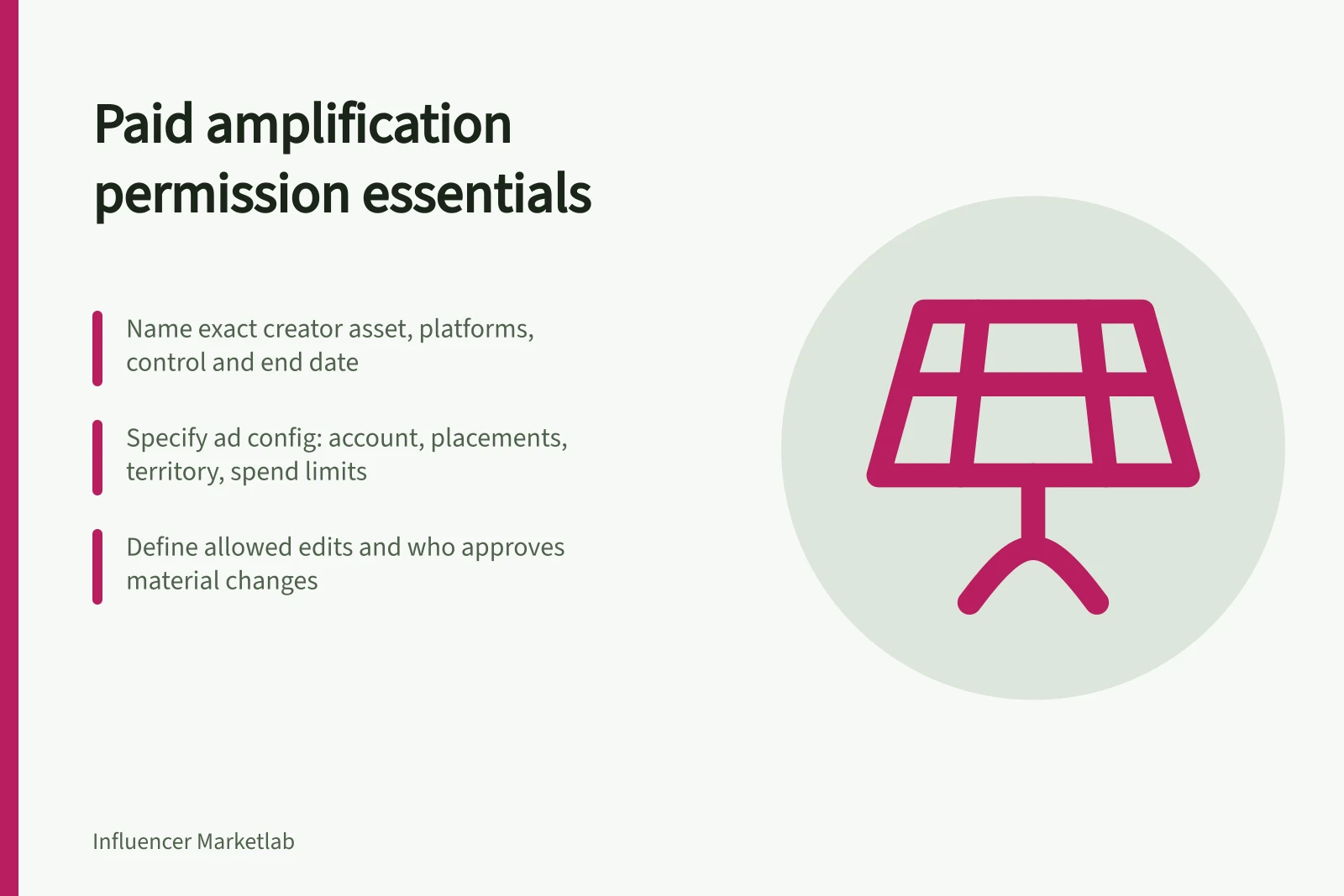
A paid amplification permission should identify the exact creator asset, where the ad may run, who controls it and when the permission ends.
A paid amplification permission should name the exact creator asset, the places the ad may run, who controls it and when permission ends. “Can we boost this?” is too vague if the brand later edits the video, uses the creator's handle or moves it to another platform.
Key statistics from IP Australia and AANA guidance
- IP licence definition
- Permission for defined uses of intellectual property
- AANA Code of Ethics coverage
- Applies to advertising under advertiser's reasonable control
- Rights management organisations
- Support licensing and rights tracking in Australia
Write down the ad configuration
Name the approved post or file version and the account that pays for and publishes the ad. List permitted platforms and placements, territory, term and any spend or audience constraints the parties choose.
If the platform offers an authorisation for ads using the creator's identity, specify who grants access, how long it lasts and who revokes it. These are practical contract items; check platform feature names and settings at setup.
Separate the creator's own sponsored post from a brand ad using the creator's content. They may show different account names, disclosures and calls to action. The AANA Code of Ethics applies to advertising and marketing communication under the advertiser's reasonable control, whether or not a payment or other valuable consideration has been involved. Review the final placement rather than treating a licence as the disclosure review.
Decide which edits are allowed
Paid teams often need different aspect ratios, captions, shortened cuts or a new closing frame. State which changes may be made without another approval and which require the creator's sign-off. A product claim added to an approved video is a material change even if the visuals are mostly the same. Keep a copy of the approved version beside any later cut.
Check third-party elements. Music acceptable in the creator's original post may have a different permission status in a brand advertisement. Other people, locations and graphics may also carry separate rights. IP Australia describes a licence as permission for defined uses of IP; a creator's licence does not prove they control every embedded element.
Control the end of the permission
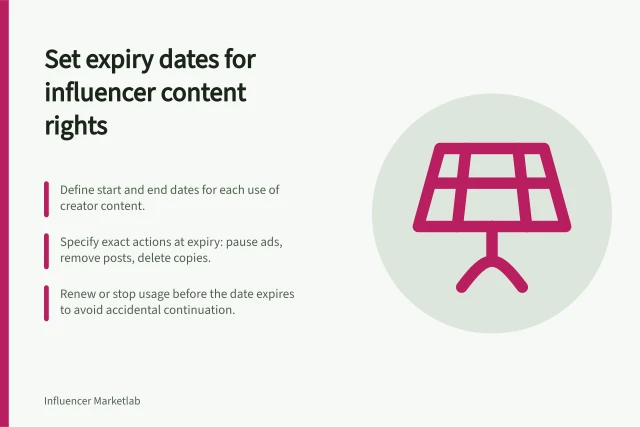
Record the ad start and stop dates and what happens to campaigns still in an ad manager at expiry. Decide whether the brand can keep the file for records while stopping distribution. If the creator withdraws a platform authorisation or an asset is disputed, assign a contact and a pause process. A renewal should identify the additional period and any wider use.
The final handover should contain a rights summary that media buyers can understand without interpreting the whole contract: asset, approved cuts, accounts, placements, dates, territory, edits and approval contact. If a proposed ad falls outside a line of that summary, resolve the permission before launch.