Campaign Strategy
Influencer campaign operations from booking to delivery
Coordinate Australian creator campaigns from accepted booking through production, release, publication and delivery close-out.
After a creator accepts a booking, consolidate the agreed work into one campaign schedule. Show each deliverable, brand inputs, draft and publication windows, who can release a post, and delivery evidence. Keep agreed changes visible to both sides.
Turn the booking into a schedule
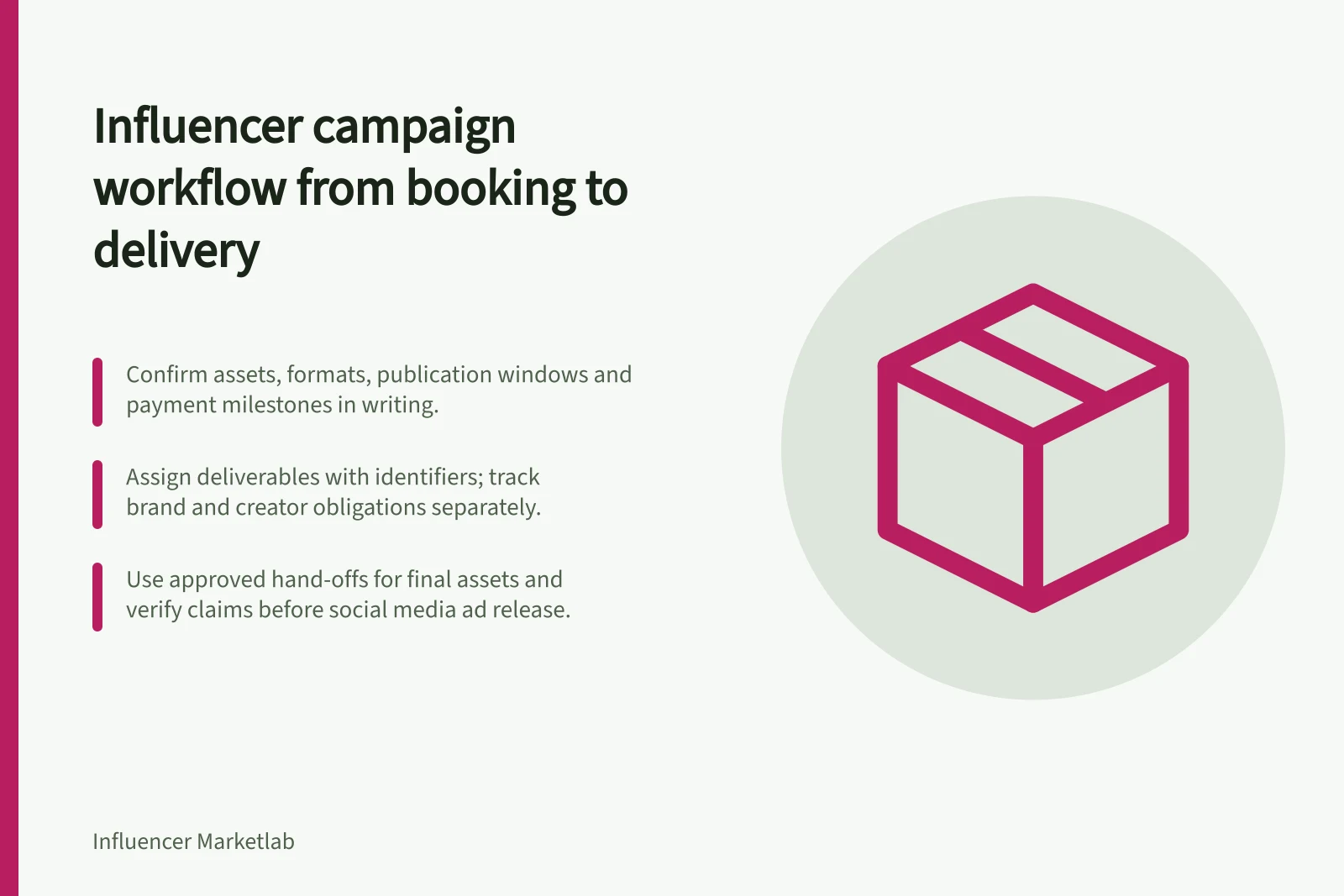
Confirm the accepted assets and formats, publishing accounts, product access, draft and feedback dates, publication windows, payment milestones and any separate brand use of the content. Assign each deliverable an identifier. A post on the creator’s account and a clean file for the brand are separate items, even if they come from the same edit.
Put brand obligations beside creator obligations. Name who supplies the product and checked facts, who answers questions, who consolidates feedback and who makes the release decision. If a brand input arrives late, discuss the dates that depend on it. The schedule should reflect the accepted agreement; changing a tracker entry does not itself establish that both parties agreed to new terms.
Creator vs Brand Responsibilities in Influencer Campaigns
- Who supplies the product?
- Brand
- Who checks factual accuracy of claims?
- Brand
- Who consolidates feedback?
- Brand or campaign manager
- Who makes the release decision?
- Brand (as per contract)
- Who provides clean files for brand use?
- Creator
Follow clear hand-offs
A useful sequence is booked, inputs ready, in production, submitted for review, approved for release, published and captured, then closed. These are working states, not automatic contractual milestones. Record the person and date behind each state change. Attach approval to the exact asset version and caption so the creator knows what may be published.
Before release, route the final asset through the campaign’s designated approval hand-off, using the current offer and relevant requirements as reference.
For social media advertising, check that claims are accurate and that any commercial relationship is clear in the finished placement.
If an offer changes after approval, identify the affected claim and send a release, revise or hold instruction. Agree any new work and timing with the creator before assuming the original publication window still works.
Keep the support for campaign claims available alongside the release record. The ACCC can require a business to substantiate claims made on social media, so the final published version and the material relied on for its claims should be identifiable if questions arise later.
Make contract terms usable
Keep the accepted agreement available to the people managing delivery. Written contracts should identify both parties by full legal names and business addresses, include ABNs where needed, and be signed by both parties. This makes it clear which parties accepted the terms being used to manage the campaign.
Use plain English to describe the work or results expected. The agreement should also state how and when payment is made, and what conditions the contractor must meet before the hirer considers the work finished. These terms give the close-out decision a reference point beyond a change in campaign status.
Set out who is responsible for faulty or incomplete work. If a delivery does not meet the agreed conditions, check that responsibility clause before treating the campaign as complete or assuming that a particular correction is required.
For a change to agreed work, follow the contract’s variation provisions and document the variation. Update the campaign schedule to reflect an accepted change, while retaining the agreement and any variation record that establishes what the parties have accepted.
Use the agreed resolution process
Include a process for settling disputes in the contract, so the parties have an agreed route when a delivery issue cannot be resolved through ordinary campaign hand-offs. Refer to that process rather than creating new rules once a disagreement has arisen.
Check whether the contract can end early and what its terms say about doing so. If early termination is being considered, use the agreed provisions to guide the decision and record what work remains; do not assume that a missed step automatically ends the arrangement.
The ACCC may investigate or take compliance or enforcement action over false or misleading claims in social media advertising. It does not resolve individual disputes about misleading claims.
Handle exceptions and close the work
For a late draft, delayed product or cancellation, record the affected deliverables, the last useful publication window, the next decision time and who must act. A narrower asset or later post may help if both parties agree and the piece remains accurate. Tell everyone responsible for a dependent step when the plan changes. Preserve the original commitment beside the agreed revision.
After publication, capture the live URL, account, time and final version. Check separately promised files and reporting against the accepted scope, then pass the delivery record into invoice review. Keep permission for brand reuse attached to the specific asset: publication on a creator account does not define every later use. Close with the remaining work, payment steps and applicable content permissions recorded.
In this guide
- Building a creator delivery trackerBuild a creator delivery tracker with one row per asset, clear owners, dates, version references and publication evidence.
- Managing missed deadlines without losing the campaign windowTriage a missed creator deadline, protect the last useful publication date and agree a realistic recovery plan.
- Setting an approval process for sponsored postsSet concept, draft and release checks for sponsored creator posts, with clear owners, feedback and version-specific approval.
- Handling replacement creators after a cancellationResolve the cancelled booking, check whether a new creator can meet the window and agree fresh work and approval terms.